
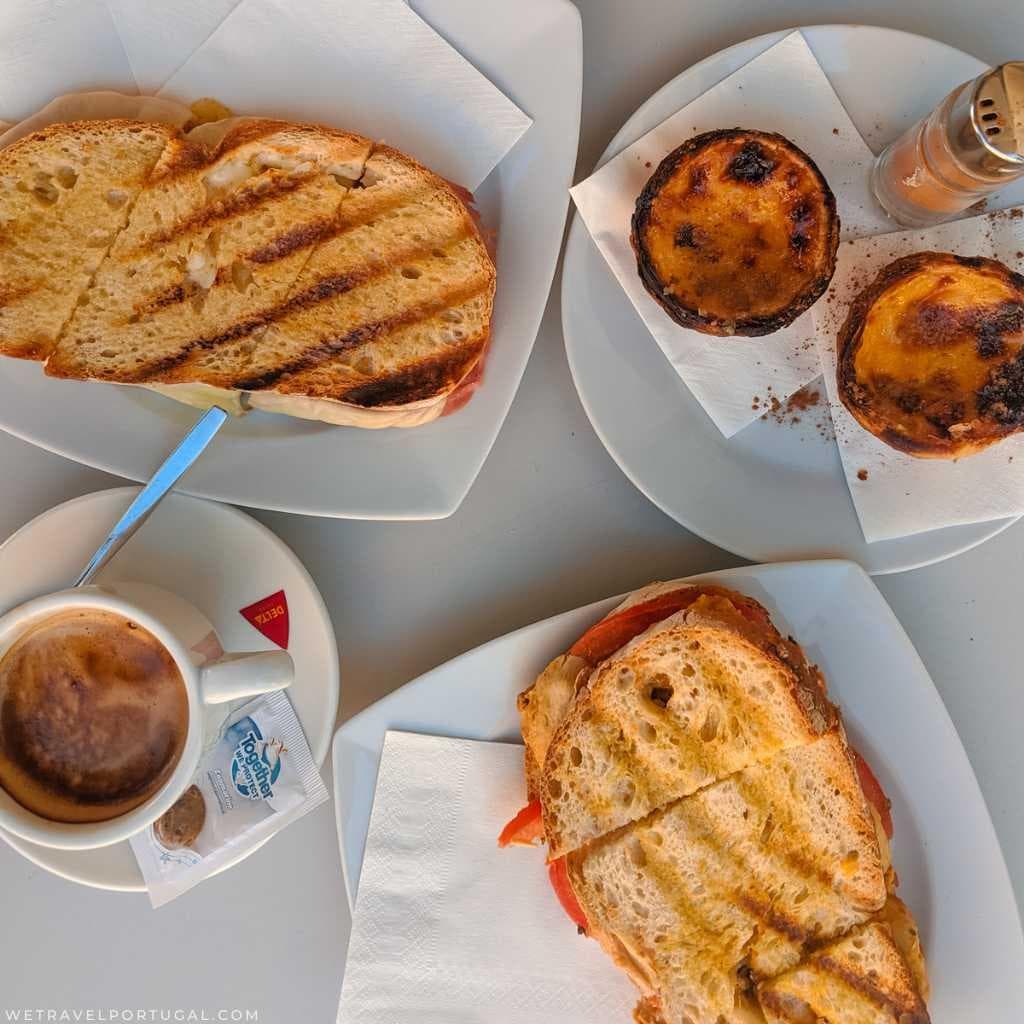
Breakfast in Portugal is usually light: coffee or milk, bread or toast, a sandwich, or something sweet from a pastelaria. There is no single national breakfast plate.
Portugal's 2015–2016 national food survey gives a clearer picture than the usual tourist shorthand. A cereal-based food, most often bread, appeared in 72% of recorded breakfasts. Coffee appeared in 59%, while milk or a milk substitute appeared in 54%. These categories overlap, so they describe recurring parts of breakfast rather than one fixed combination.
The result is an everyday meal with a fairly small set of familiar building blocks, adjusted to taste, routine and where breakfast is eaten.
At home, breakfast is usually simple
Bread or toast with butter is one of the most basic versions. Cheese or fiambre, the Portuguese word for cooked ham, can turn the same bread into a small sandwich.
Coffee, coffee with milk, plain milk, yoghurt and cereals also fit easily into a home breakfast. Individual habits vary, but elaborate cooked breakfasts are not the best reference point for the traditional pattern described in Portuguese dietary data and official tourism information.
That is why a list of famous pastries can give a distorted picture. Bread, coffee and milk say more about an ordinary morning than a table covered with Portuguese sweets.
A pastelaria gives you more choice
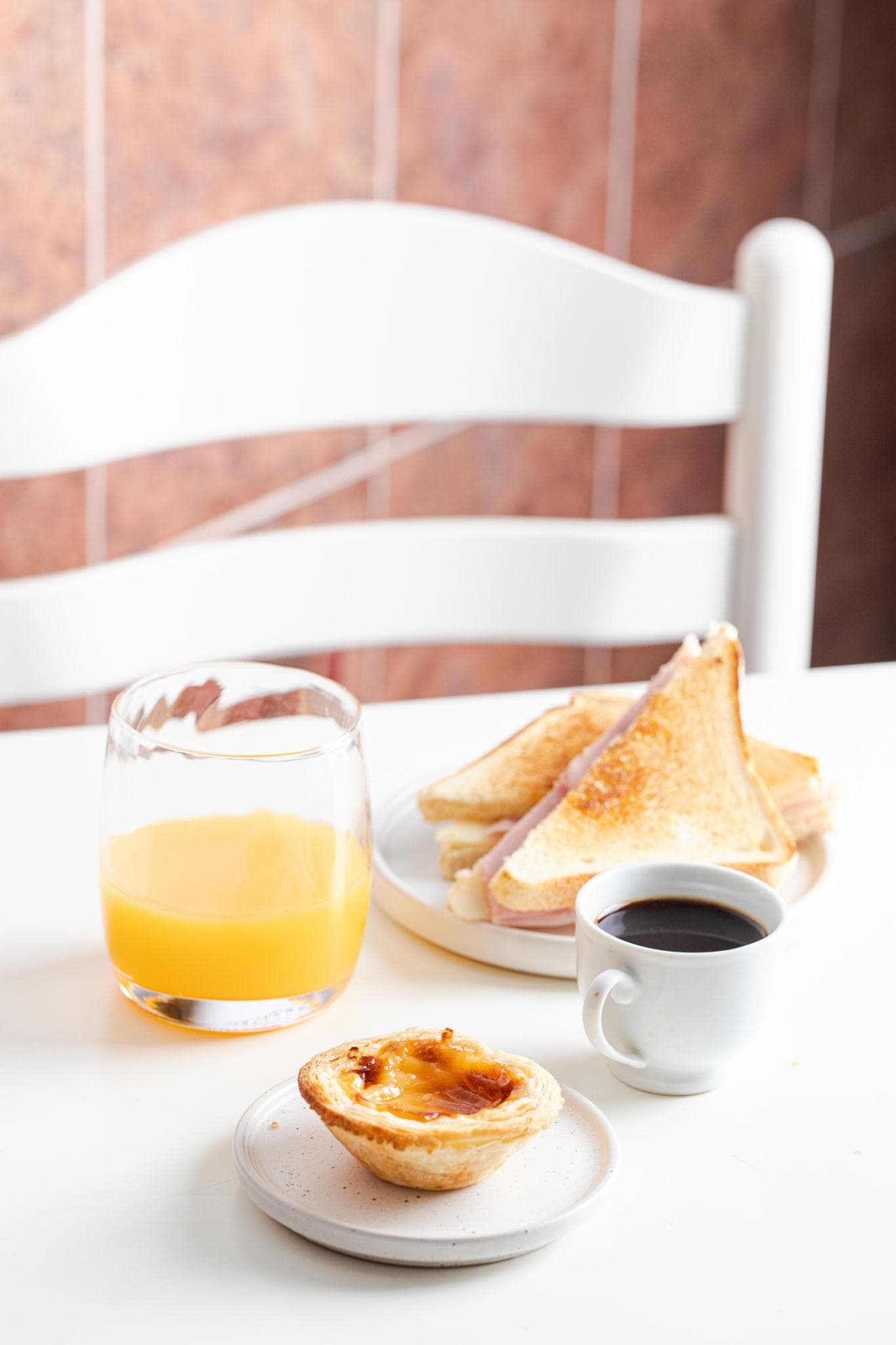
A Portuguese pastelaria is not only a place for cakes. Most also serve coffee, bread, toast, sandwiches and other simple food throughout the day.
At breakfast, that might mean a meia de leite with buttered toast, an espresso with a pastry, or a toasted ham-and-cheese sandwich.
Pastel de nata fits naturally here. Coffee and a pastel de nata are a familiar Portuguese pairing, and having one for breakfast is entirely plausible. It should not, however, stand in for the whole country's breakfast habits.
Croissants and other pastries work the same way. They are part of the choice, alongside the less photogenic but more ordinary options of bread, toast and sandwiches.
For the wider food culture, VIVA Portugal's guide to traditional Portuguese foods covers the dishes and pastries worth knowing beyond breakfast.
Four easy orders in a Portuguese café
You do not need to look for something called a “Portuguese breakfast” on the menu.
Meia de leite and torrada A meia de leite is coffee with a generous amount of milk, usually served in a cup. Pair it with buttered toast for a simple café breakfast.
Galão and bread or a sandwich A galão is also made with coffee and milk, but is generally milkier and traditionally served in a tall glass. Preparation varies between cafés, so fixed ratios are not especially useful.
Coffee and pastel de nata The combination visitors are most likely to recognise. It is genuinely Portuguese, just not the only authentic breakfast choice.
Tosta mista and coffee A toasted ham-and-cheese sandwich makes a more substantial breakfast without becoming a large cooked meal.
Café, bica, galão or meia de leite?
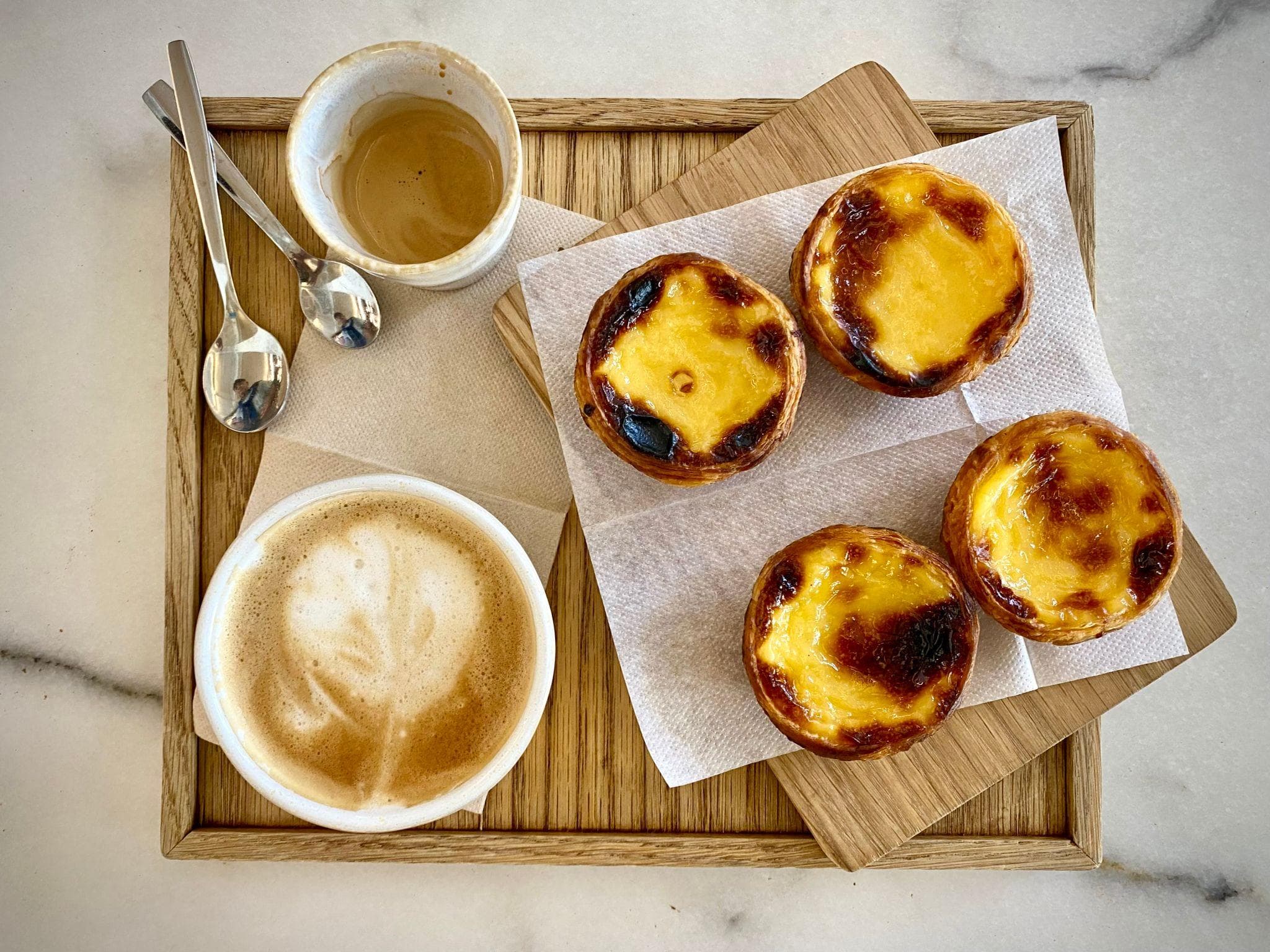
Ask for um café in Portugal and you will normally get an espresso.
In Lisbon, bica is another traditional name for it. Porto has its own historic term, cimbalino.
A meia de leite combines coffee and milk in a cup. A galão is generally milkier and traditionally comes in a tall glass.
The useful distinction is simple: café is short and strong; meia de leite softens it with milk; galão is usually the mildest and milkiest of the three.
And what about eggs, pancakes and brunch?
You will have no trouble finding them, especially in Lisbon, Porto and other large cities. Modern brunch cafés have added eggs, pancakes, avocado toast and larger breakfast plates to the morning options available in Portugal.
They describe a different part of the food scene.
Turismo de Portugal still describes a typical breakfast as a light meal built around a drink with bread, toast or a sandwich. That leaves plenty of room for individual habits without turning a modern brunch menu into a definition of Portuguese breakfast.
For a straightforward version, a neighbourhood pastelaria and an order of coffee with toast, a sandwich or a pastry will take you much closer to the everyday culture.

Comments
Sign in to join the discussion. Sign in